

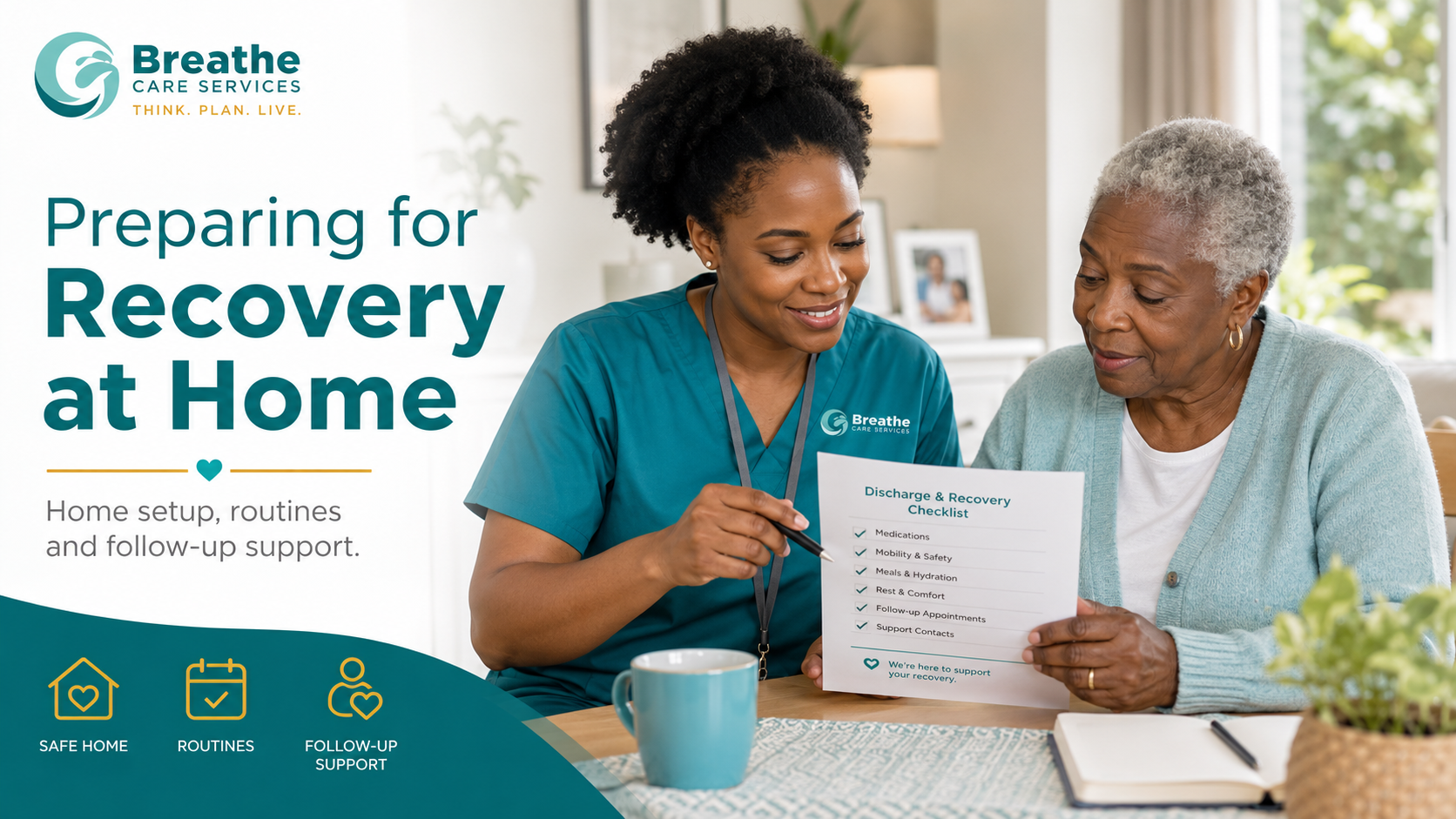
Leaving hospital is often a moment people look forward to.
There is relief in returning to familiar surroundings, sleeping in your own bed and getting back to ordinary life.
But coming home can also be the point when the reality of recovery becomes clearer.
Someone who was independent before going into hospital may suddenly find everyday activities more difficult. Getting dressed may take longer. Walking from the bedroom to the kitchen may feel exhausting. Medication may have changed. Preparing meals may be difficult. Family members may find themselves providing much more care than they expected.
That does not necessarily mean the person will always need that level of help.
For many people, the period immediately after leaving hospital is about recovering confidence, rebuilding everyday skills and gradually becoming more independent again.
The NHS describes this kind of short-term support as intermediate care, which can include rehabilitation and reablement. It may be offered after hospital discharge, illness, injury or a fall to help someone recover and remain as independent as possible.
The right support at home can make that transition easier.
Recovery Does Not End at the Hospital Door
Being medically ready to leave hospital does not always mean somebody has returned to the level of independence they had before becoming unwell.
They may still need time to:
- Rebuild strength
- Regain confidence
- Adjust to new medication
- Adapt to mobility changes
- Re-establish personal-care routines
- Prepare meals safely
- Attend follow-up appointments
- Learn new ways of completing everyday activities
Current hospital-discharge guidance in England emphasises safe and timely discharge alongside cooperation between NHS services, local authorities and adult social-care providers where ongoing support is required.
For families, this means it is useful to think beyond simply:
“When are they coming home?”
and also ask:
“What will they need when they get there?”
1. Prepare the Home Before Discharge
If possible, begin thinking about the home environment before the person returns.
A home that was easy to manage before hospital admission may now present unexpected difficulties.
For example:
- Stairs may feel harder
- Getting into the bath may no longer feel safe
- The bed may be too low
- Frequently used items may be difficult to reach
- Clutter may create unnecessary obstacles
- The person may need somewhere comfortable to rest during the day
The goal is not to redesign the entire house.
It is to identify anything that could make everyday recovery unnecessarily difficult.
Depending on the person’s needs and professional recommendations, this might involve:
- Clearing safe walking routes
- Moving frequently used items within easy reach
- Making sure suitable food is available
- Preparing clean bedding and clothing
- Ensuring heating and lighting are working properly
- Organising any recommended equipment before or shortly after discharge
The person’s hospital or community team may also identify equipment, adaptations or additional support that could help them return home safely.
NHS guidance explains that discharge planning may include assessment of what support someone needs after leaving hospital, including intermediate care where appropriate.
2. Understand the New Daily Routine
One of the biggest adjustments after hospital can be that the person’s previous routine no longer works in exactly the same way.
Before hospital, someone might have:
Got up → showered → prepared breakfast → taken medication → gone shopping.
After discharge, they may need to:
Get up slowly → receive help washing → take medication → eat → rest → practise walking → attend an appointment.
Recovery can therefore involve creating a new temporary rhythm.
It can help to understand:
- What time the person usually wakes
- Whether personal care is now more difficult
- When medication needs to be taken
- When meals should be prepared
- Whether rest periods are needed
- What exercises or rehabilitation activities professionals have recommended
- Whether someone needs assistance getting to bed
- Which activities the person can still complete independently
Consistency can make the first days at home feel less overwhelming.
But the routine should not become unnecessarily restrictive.
Where possible, the individual should still make choices about their own day and remain involved in everyday activities.
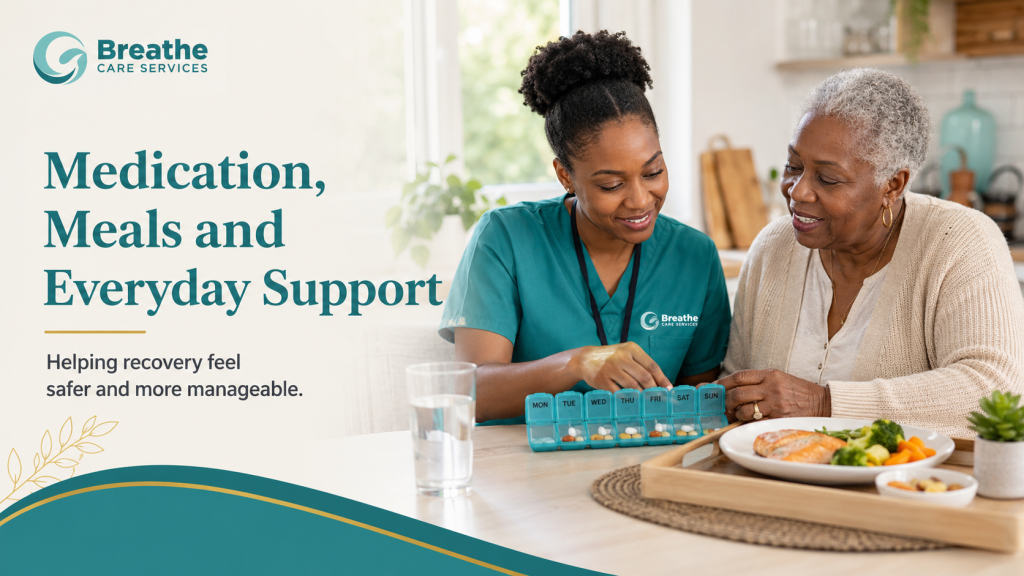
3. Make Medication Changes Clear
Hospital stays can sometimes result in changes to medication.
A person may come home with:
- New medicines
- Different doses
- Different medication times
- Medicines that have been stopped
- Short-term prescriptions
- Instructions for follow-up reviews
That can be confusing, particularly when someone was already taking several medicines before admission.
Before or after discharge, make sure the person understands the medication instructions provided by the healthcare team.
Useful questions may include:
Which medicines should now be taken?
Have any previous medicines been stopped?
When should each medicine be taken?
How long is any new medicine required?
Who should we contact if something is unclear?
If a home-care worker is going to provide medication support, CQC guidance states that this support should be clearly documented in the person’s care plan and that staff providing it should have appropriate training and support.
Do not rely on family members or carers guessing what changed during the hospital stay.
If medication instructions are unclear, check with the person’s pharmacist, GP, hospital team or another appropriate healthcare professional.
4. Pay Attention to Meals and Hydration
Food can easily become an afterthought during recovery.
A person may be home, comfortable and medically stable—but still struggle to:
- Stand long enough to cook
- Carry hot food safely
- Shop for groceries
- Open packaging
- Remember regular meals
- Drink enough throughout the day
Some people may also have specific dietary recommendations following treatment.
Families sometimes respond by doing everything themselves.
That may be necessary initially.
But where appropriate, recovery-focused support can help someone remain involved.
For example, a carer might:
- Prepare ingredients together with the person
- Help them make a simple breakfast
- Support grocery shopping
- Prepare drinks within easy reach
- Encourage an established mealtime routine
- Help organise the kitchen so everyday items are easier to access
The intention is not simply to make sure the task gets completed.
It is also to help the individual gradually return to doing as much as they can safely manage themselves.
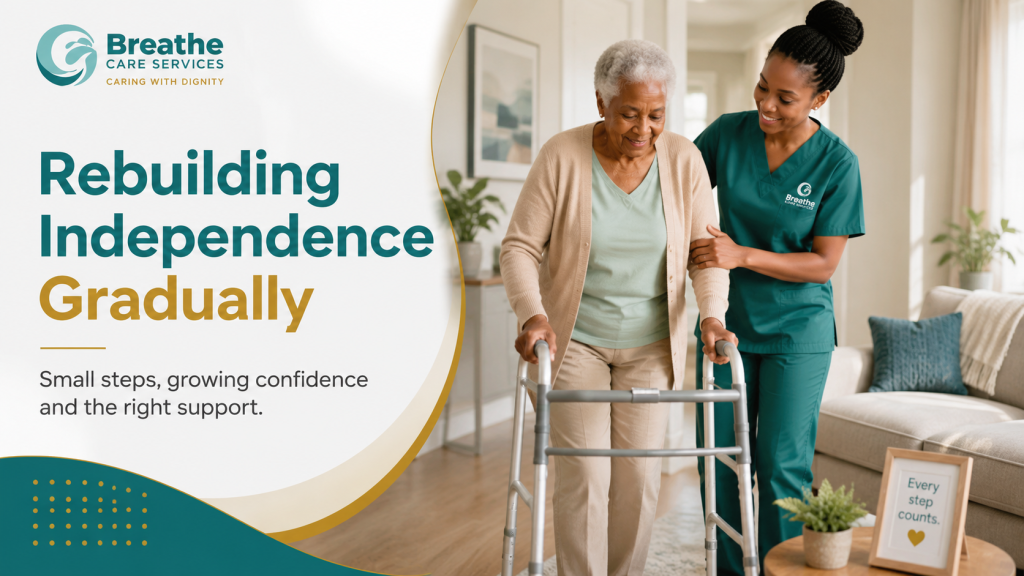
5. Rebuild Mobility Gradually
One of the most noticeable changes after hospital can be reduced mobility.
Someone who previously moved around the house without thinking about it may now feel:
- Weak
- Unsteady
- Tired
- Afraid of falling
- Unsure about stairs
- Nervous going outdoors
Sometimes confidence reduces almost as much as physical ability.
After a fall, for example, a person may technically be able to walk but become frightened of falling again.
That fear can lead them to move less.
And moving less can make everyday independence harder.
Where a physiotherapist, occupational therapist or another healthcare professional has provided mobility guidance or exercises, carers and family members should follow those recommendations rather than creating their own rehabilitation programme.
Reablement services are specifically intended to help people regain or maintain skills and independence following illness or hospital discharge. NICE describes intermediate care and reablement as services intended to support recovery, timely hospital discharge and greater independence.
Support may therefore involve encouraging the person to participate in everyday movement safely instead of automatically doing everything for them.
6. Personal Care May Need Temporary Support
Activities such as washing, dressing and using the bathroom can become much harder after illness, surgery or a period of reduced mobility.
Someone may need temporary help with:
- Getting washed
- Bathing or showering
- Dressing
- Grooming
- Toileting
- Getting into or out of bed
For many people, needing this assistance can feel uncomfortable.
They may previously have managed all personal care independently.
That is why support should be provided with dignity and respect.
It is also important not to assume that because someone needs help today, they will always need the same amount of help.
Where recovery allows, support can gradually change.
Initially, a carer may provide significant assistance.
Later, the person may be able to complete much of the routine themselves with only a little support.
That gradual shift is central to the idea of reablement.
7. Keep Track of Follow-Up Appointments
Coming home does not necessarily mean treatment has finished.
There may still be:
- GP appointments
- Hospital follow-ups
- Physiotherapy
- Occupational therapy
- Community nursing
- Blood tests
- Medication reviews
- Specialist appointments
When somebody is tired or adjusting to life back at home, keeping track of all these appointments can become difficult.
Practical support may include:
- Recording appointments clearly
- Arranging transport
- Helping the person prepare questions
- Accompanying them where appropriate
- Making sure important information from appointments is understood
The individual should remain involved rather than simply having appointments organised around them.
A useful question is:
“What support would help you manage this yourself as much as possible?”
8. Do Not Let the Entire Care Package Fall on One Family Member
Hospital discharge can change family life very quickly.
A daughter may think:
“I’ll stay with Mum for a few nights.”
Then a few nights become several weeks.
She is preparing meals before work, helping Mum dress, organising medication, doing the shopping, attending appointments and staying overnight.
Another family member may be travelling across Birmingham every evening.
Everyone wants to help.
But an arrangement created in an emergency is not always sustainable.
Watch for signs that family carers are becoming overwhelmed:
- Lack of sleep
- Missing work
- Constant anxiety
- Difficulty caring for their own children
- Feeling unable to leave the person alone
- Resentment or family disagreements
- Exhaustion
- Feeling guilty about needing a break
Accepting professional support does not mean the family is withdrawing.
It can allow relatives to return to being sons, daughters, partners and friends, rather than becoming the sole care system.
9. Reablement Should Focus on What the Person Can Regain
One of the most important principles after hospital is that support should not create dependence unnecessarily.
The NHS explains that intermediate-care or reablement staff may initially provide help but work with the person to practise doing things independently again.
That can mean approaching everyday tasks differently.
Instead of:
“I’ll make your breakfast.”
the approach might become:
“Let’s see which parts of breakfast you can manage today.”
Instead of:
“Don’t walk anywhere; I’ll bring everything to you.”
it might be:
“Let’s follow the mobility guidance you’ve been given and help you safely practise moving around the home.”
Progress may involve:
- Getting dressed with less assistance
- Preparing a simple meal
- Walking safely to another room
- Managing part of the morning routine
- Making a cup of tea
- Going outside again
- Returning to the local shops
- Resuming hobbies
These may appear to be small achievements.
For someone recovering from illness or injury, they can represent a major return of confidence and control.
Reablement Is Not the Same as Doing Everything for Someone
This distinction matters.
Traditional care may sometimes focus heavily on completing necessary tasks.
Reablement asks an additional question:
“How can we support this person to regain the ability or confidence to do more for themselves?”
That does not mean forcing someone to do something that is unsafe or beyond their abilities.
It means recognising opportunities for recovery.
A person might currently need help getting dressed.
Rather than automatically dressing them completely every morning, support could gradually encourage them to manage whichever parts they can safely complete themselves.
Over time, the level of assistance may reduce.
NICE guidance describes reablement as part of intermediate care designed around helping people recover skills and independence.
Set Small, Meaningful Goals
Recovery can feel frustrating when the only goal is:
“Get back to normal.”
That goal can seem enormous.
Instead, smaller goals may feel more achievable.
For example:
Week One
“I want to get from my bedroom to the living room safely.”
Next Goal
“I want to make my own morning drink.”
Later
“I want to prepare breakfast.”
Eventually
“I want to walk to the local shop again.”
The goals should matter to the individual.
One person may desperately want to return to gardening.
Another may want to attend church.
Someone else may simply want to shower without assistance.
Recovery becomes more meaningful when it is connected to the person’s actual life.
Progress Is Not Always a Straight Line
Recovery can fluctuate.
Someone may have an excellent day followed by a difficult one.
They may feel stronger in the morning and exhausted in the afternoon.
Confidence may improve before physical ability—or the other way around.
Families should avoid treating every difficult day as a failure.
At the same time, significant or concerning changes should not simply be attributed to recovery.
If someone becomes unexpectedly unwell, develops new symptoms, has a fall, becomes significantly more confused or you are otherwise concerned about their health, contact the appropriate healthcare service rather than relying solely on social-care support.
Home carers can provide important everyday assistance, but they do not replace doctors, nurses, physiotherapists, occupational therapists or emergency healthcare.
What If Short-Term Reablement Is Not Enough?
Sometimes someone recovers enough to return completely to independent life.
Sometimes they recover substantially but continue to need some assistance.
And occasionally, a hospital admission reveals support needs that were already developing before the person became unwell.
Perhaps family members now realise that Dad had already been:
- Missing medication
- Struggling with meals
- Becoming less mobile
- Finding personal care difficult
- Falling more frequently
- Becoming increasingly isolated
In that situation, the question becomes:
“What support will help him remain safely and comfortably at home longer term?”
This is where ongoing home care may become appropriate.
What Can Ongoing Home Care Look Like?
Longer-term support does not automatically mean someone needs somebody with them throughout the day.
It could be relatively light.
For example:
Morning Visit
Help with personal care, dressing, breakfast and medication.
Lunchtime Visit
Meal support, medication where required and a wellbeing check.
Evening Visit
Help with dinner, personal care and preparing safely for the night.
Another person may only need several visits each week.
Someone with more substantial needs might eventually require overnight or live-in support.
The care arrangement should reflect what the person actually needs, rather than automatically continuing the level of assistance they required immediately after leaving hospital.
Short-Term Support Should Lead to a Clear Next Step
If someone receives reablement or intermediate care, there should ultimately be clarity about what happens when that period ends.
NICE’s quality standard for intermediate care includes planning for the transition when intermediate-care support finishes.
At that stage, possible outcomes might include:
No further support required
The person has regained enough independence.
Some informal family support
The person manages most activities but relatives continue helping occasionally.
Ongoing home care
Scheduled professional support remains necessary.
A different care arrangement
The person’s longer-term needs may require another form of support.
The important thing is not to reach the end of short-term support and suddenly ask:
“What happens tomorrow?”
Questions Families Can Ask Before Hospital Discharge
If someone you love is preparing to leave hospital, you may find it useful to ask:
What can they safely do independently now?
What activities do they still need help with?
Has their medication changed?
Is any equipment needed at home?
Have mobility recommendations been provided?
Are follow-up appointments already arranged?
Will any community health professionals be involved?
Has short-term reablement or intermediate care been considered?
What should we do if their condition changes?
Who should we contact if the current support is not enough?
The hospital and community teams responsible for the person’s care are best placed to answer clinical discharge questions.
What Families Can Do During the First Few Days at Home
The first days do not need to be perfect.
Focus on making the transition manageable.
You might:
- Keep routines simple
- Make meals easy to access
- Make sure medication instructions are understood
- Keep important contact numbers available
- Encourage appropriate rest
- Follow professional mobility or rehabilitation advice
- Attend important appointments
- Observe which everyday tasks are particularly difficult
- Ask the person what they are worried about
- Celebrate progress
Most importantly, continue involving them.
Do not let recovery become something that everyone else organises around the person.
Ask:
“What would you like to be able to do again?”
That answer can shape the entire recovery journey.
The Aim Is Not Just to Keep Someone Safe
Safety matters enormously after hospital discharge.
But recovery should ideally involve more than preventing falls and making sure medication is taken.
The bigger goal is helping someone return to their life.
Perhaps that means:
Going back into the garden.
Preparing Sunday lunch.
Walking to the corner shop.
Going to church.
Meeting friends.
Having a shower without help.
Making their own cup of tea.
Each of these can represent independence.
That is why effective reablement should focus not only on what support someone needs today, but also on what they may be capable of doing tomorrow.
Coming Home Should Be a Step Forward
Hospital discharge can feel uncertain.
But with appropriate planning, professional guidance and the right level of support, coming home can become the beginning of a gradual return to confidence and independence.
The key is not to assume that someone either:
“Can cope alone”
or
“Needs everything done for them.”
There is a large space between those two situations.
That space is where carefully planned support can make a real difference.
Need Support After Leaving Hospital?
At Breathe Care Services, we provide personalised reablement and home-care support across Birmingham and surrounding areas.
Our approach focuses on helping people manage everyday routines safely while encouraging confidence, participation and independence wherever possible.
Explore Reablement Care
Learn more about how reablement support can help someone rebuild everyday skills and confidence following illness, injury or hospital discharge.
Or: