


Choosing a home care provider for yourself or someone you love is a significant decision.
You are not simply choosing somebody to help with household tasks. Depending on the support required, carers may be helping with personal care, medication, meals, mobility and some of the most private parts of everyday life.
The right provider should therefore offer more than availability.
You should feel confident that the organisation understands the person, recruits appropriate carers, communicates clearly, responds when circumstances change and delivers care in a way that protects dignity and independence.
The Care Quality Commission (CQC) assesses regulated services using five fundamental questions: whether they are safe, effective, caring, responsive to people’s needs and well-led. Those principles provide a useful framework when comparing home care providers.
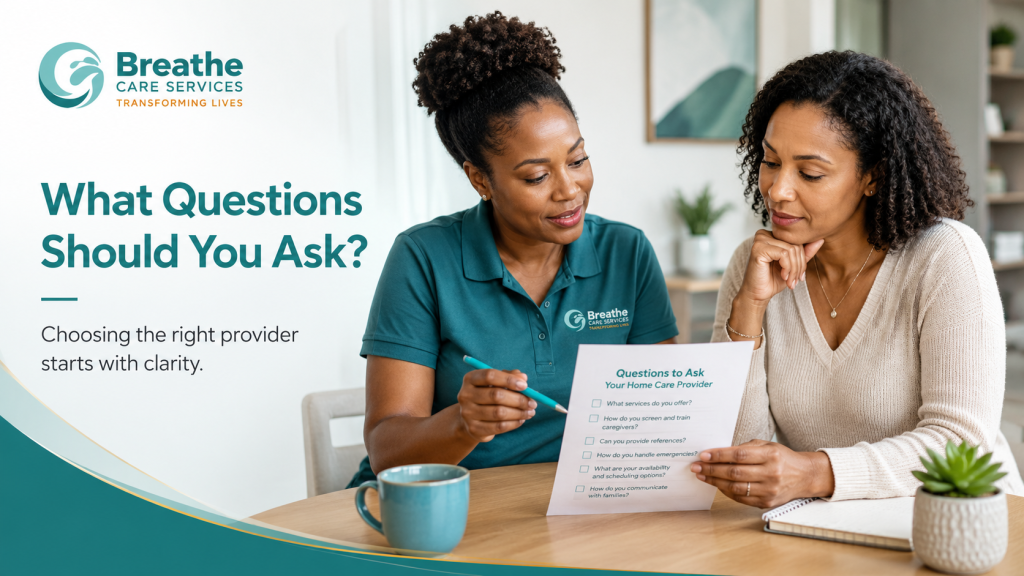
If you are looking for home care in Birmingham, here are 10 important questions to ask before making your decision.
1. What Care Services Do You Provide?
Start with the obvious question.
Not every home care provider offers the same services or supports the same range of needs.
A provider may offer:
- Personal care
- Medication support
- Meal preparation
- Companionship
- Domestic assistance
- Respite care
- Overnight care
- Live-in care
- Dementia support
- Physical disability support
- Learning disability support
- Reablement
The NHS specifically recommends asking prospective home care agencies whether their carers have experience supporting people with needs similar to yours.
That distinction matters.
A family looking for a few companionship visits each week has very different requirements from someone needing several personal-care visits every day.
Ask:
“Have you supported people with needs similar to ours?”
Then ask the provider to explain how that support would actually work.
A confident provider should be able to discuss what it can offer—and also be clear about anything it cannot safely provide.
2. How Are Your Carers Recruited?
A warm personality matters in care, but recruitment should go much further.
Ask the provider how it decides whether someone is suitable to enter people’s homes and provide care.
Questions might include:
- What recruitment checks are completed?
- Are references obtained?
- Are appropriate background checks completed?
- How is right to work checked?
- How do you assess someone’s values and attitude towards care?
- What happens before a new carer begins working independently?
Safer recruitment should be followed by proper induction and ongoing supervision. Skills for Care recommends structured induction and appropriate training in areas such as safeguarding and safer working practices for new adult-social-care staff.
Do not be uncomfortable asking about recruitment.
If someone will be helping your parent dress, supporting them with medication or entering their home when relatives are not present, you have every reason to understand how that person was selected.
3. What Training Do Your Carers Receive?
“Fully trained carers” sounds reassuring.
But it is worth asking:
Trained in what?
The training required should reflect the work carers are expected to perform.
Depending on the role and individual care package, relevant areas might include:
- Safeguarding
- Moving and assisting
- Infection prevention
- Medication
- Dementia awareness
- Personal care
- Food safety
- Communication
- Health and safety
- First aid or basic life support
- Learning disability or autism awareness where relevant
Skills for Care emphasises induction as the beginning of ongoing learning and development rather than a one-off exercise when someone joins an organisation.
You can therefore ask:
“How do you make sure carers remain competent after their initial training?”
Look for an answer involving supervision, refresher learning, competency checks or continuing development—not merely certificates completed years ago.
4. How Will the Care Plan Be Created?
Good home care should not begin with a generic checklist.
It should begin by understanding the person.
CQC says a good home-care service should involve people in decisions about their care and respond to their individual needs.
Before care begins, ask how the provider assesses:
- Personal-care requirements
- Medication
- Mobility
- Meals and nutrition
- Daily routines
- Communication preferences
- Cultural or religious preferences
- Risks within the home
- Social activities
- Family involvement
- Personal goals
- What the individual can still do independently
There is a significant difference between:
“Mrs Jones needs breakfast prepared at 8am.”
and:
“Mrs Jones enjoys preparing her own toast but needs help safely carrying hot drinks and remembering her morning medication.”
The second approach tells you something about the person—not merely the task.
Ask:
“How will my loved one be involved in creating their own care plan?”
The person receiving care should, wherever possible, remain central to decisions about their life.
5. Will the Same Carers Visit Regularly?
For many people, continuity is extremely important.
Imagine having a different stranger enter your home every morning to help you wash and dress.
Even when each carer is individually competent, constant changes can make care feel impersonal and uncomfortable.
Continuity can be particularly important for someone who:
- Has dementia
- Is autistic
- Has communication difficulties
- Becomes anxious around unfamiliar people
- Requires intimate personal care
- Relies heavily on established routines
Ask:
“How do you organise continuity of carers?”
You can also ask:
- How many carers are likely to be involved?
- Will we meet carers before support begins?
- What happens when the regular carer is on leave?
- How will we be told if somebody different is coming?
The NHS specifically suggests asking an agency how it will choose the most suitable carer and whether agreed visit times can be maintained or delays communicated.
Perfect continuity will not always be possible because of holidays, sickness and staffing requirements.
What matters is whether the provider has a sensible system for managing those changes.
6. What Happens If Care Needs Change?
Care needs rarely remain exactly the same forever.
An older adult who initially requires one morning visit may later require:
- Additional evening support
- Help with medication
- More assistance with mobility
- Meal preparation
- Overnight care
Someone recovering after hospital discharge may experience the opposite—their support may reduce as confidence and independence return.
A good provider should therefore have a process for reviewing and adapting care.
CQC considers responsiveness to people’s changing needs an important feature of good care.
Ask:
“How often is the care plan reviewed?”
And:
“What happens if we notice that Mum suddenly needs more help?”
You want to know:
- Who you contact
- How quickly concerns are reviewed
- Whether another assessment may be required
- How changes are documented
- How carers are informed
The answer should not be:
“We just keep doing the visits that were originally booked.”
7. How Do You Handle Medication Support?
Medication is one area where vague answers should make you cautious.
Some people need only a reminder.
Others require more direct assistance.
The appropriate support depends on the person’s assessed needs and should be clearly incorporated into the care arrangement.
Ask the provider:
- How are medication needs assessed?
- What medication support can carers provide?
- How are carers trained and assessed as competent?
- How is medication support recorded?
- What happens if a medication error occurs?
- What happens if medication has run out?
- How are changes communicated?
Do not assume that every carer can automatically provide every type of medication support.
The correct level should be established during assessment and reflected clearly in the person’s care plan.
8. How Will You Communicate With Our Family?
Good care can still become frustrating when communication is poor.
Families often want to know:
Did Mum eat today?
Did Dad take his medication?
Why was the carer late?
Who do I speak to about a change in his mobility?
Has anyone noticed that she seems more confused this week?
Before choosing a provider, ask how routine and important information is communicated.
That might involve:
- Care notes
- Telephone updates
- Digital care records
- A named office contact
- Care-plan reviews
- Communication with authorised relatives
- Escalation when circumstances change
There also needs to be appropriate respect for the individual’s privacy and confidentiality.
Family involvement is valuable, but the person receiving care remains an individual with rights and preferences of their own.
Ask:
“Who will be our main contact if we have a question about the care package?”
You should know the answer before the first visit takes place.
9. What Happens If There Is a Concern?
Nobody wants to imagine something going wrong.
But this may be one of the most revealing questions you can ask.
You might have concerns about:
- A missed visit
- Persistent lateness
- A carer’s behaviour
- Medication
- Personal care
- Communication
- A change in your loved one’s condition
- Safeguarding
- How a complaint has been handled
Ask:
“If we are unhappy or concerned about something, what exactly do we do?”
There should be a clear process.
CQC describes safe care as protecting people from abuse and avoidable harm, and good services should also be well-led and responsive when problems arise.
Ask:
- Who handles complaints?
- How are concerns investigated?
- How are safeguarding concerns escalated?
- Who can we contact outside normal office hours?
- How will we know what has been done?
A trustworthy provider should not become defensive because you ask these questions.
10. How Quickly Can Care Begin?
Families often begin looking for care because something has already changed.
Perhaps Mum has had a fall.
Dad is returning home from hospital.
A relative who normally provides care has become unwell.
Or the family has simply reached the point where the current arrangement is no longer sustainable.
It is understandable to ask:
“How quickly can someone start?”
But be cautious if a provider promises immediate care before properly understanding what is required.
The correct answer may depend on:
- The person’s needs
- The complexity of the care package
- Assessment
- Risk considerations
- Required visit times
- Location
- Carer availability
- Whether specialist competencies are required
You want a provider that is responsive—but not one that skips important assessment simply to secure the care package.
An Extra Question: What Will the Care Cost?
Although our list focuses primarily on care quality, cost obviously matters.
The NHS recommends asking homecare agencies about charges, which services cost extra and, for self-funded care, whether you can review a standard contract before signing.
Make sure you understand:
- The hourly or visit rate
- Minimum visit duration
- Weekend or bank-holiday charges
- Overnight rates
- Live-in care pricing where relevant
- Travel-related charges, if any
- Cancellation terms
- Notice periods
- Any additional fees
You should know what you are agreeing to before care begins.
Check the Provider’s CQC Information
If the provider is carrying out a regulated activity such as personal care in England, check its CQC information.
The NHS homecare directory can show information including the services provided, whether a registered manager is in post and available CQC inspection information.
CQC evaluates services around whether they are:
Safe
Effective
Caring
Responsive
Well-led
Do not rely only on the badge displayed on the provider’s website.
Look at the underlying information yourself.
And remember that an inspection rating is one piece of evidence—not a substitute for asking detailed questions about the care your particular relative will receive.
Pay Attention to How the Provider Makes You Feel

There are practical questions.
But there is also something less measurable.
Do they listen?
When you first speak with the provider, notice whether the conversation feels like:
“Which package can we sell you?”
or:
“Tell us about your mum.”
Do they ask about:
- What she enjoys?
- What she can still do?
- Her routines?
- Her preferences?
- What she finds difficult?
- What she wants help with?
- What she does not want somebody taking over?
Good care is person-centred.
That principle should be visible from the first conversation—not something that appears later in a brochure.
Be Cautious About These Warning Signs
No single issue necessarily means a provider is unsuitable, but take time to investigate if you encounter:
- Vague answers about recruitment
- Little explanation of staff training
- No meaningful assessment before care begins
- No clear care plan
- Uncertainty about medication procedures
- No obvious complaints process
- Poor communication
- Pressure to agree quickly
- Promises that seem unrealistic
- Little interest in the person’s preferences
- No explanation of how changing needs are handled
Choosing slowly and carefully at the beginning can prevent significant frustration later.
Make the Decision With the Person, Not Just for Them

If you are arranging care for an older parent or another adult, it can be tempting for the family to take over the entire process.
Try to resist that where possible.
Ask your loved one:
“What matters most to you about having someone come into the house?”
They may care most about something you had barely considered.
Perhaps they want:
- A female carer
- Someone who enjoys conversation
- Morning visits at a particular time
- To continue preparing their own meals
- Help getting to church
- Someone who understands their culture
- As few different carers as possible
Their priorities should help shape your decision.
The provider is entering their home and their life.
They should remain at the centre of the choice.
A Simple Home Care Provider Checklist
Before making your final decision, make sure you can confidently answer these ten questions:
1. What services do they provide?
Do those services actually match the person’s needs?
2. How are carers recruited?
Do you understand the checks and selection process?
3. What training do carers receive?
Is it relevant to the care being provided?
4. How is the care plan created?
Will the individual be genuinely involved?
5. Will there be continuity of carers?
How are staff changes managed?
6. What happens when needs change?
Is there a clear review process?
7. How is medication support managed?
Are responsibilities clear?
8. How will the provider communicate with you?
Do you know who to contact?
9. What happens if something goes wrong?
Are complaints and safeguarding procedures clear?
10. How quickly can appropriate care begin?
Will assessment and safety still come first?
If you cannot get clear answers, keep asking.
Looking for Home Care in Birmingham?
Choosing a care provider is easier when you can have a proper conversation about the person rather than trying to make the decision from a list of services alone.
At Breathe Care Services, we provide personalised home care and support across Birmingham and surrounding areas, with care built around the individual’s needs, routines, preferences and independence.
If you are exploring care for yourself or someone you love, speak with our team about your circumstances and ask us the same questions in this guide.
Speak to Our Care Team
We’ll listen to what is happening, answer your questions and help you understand the next step.